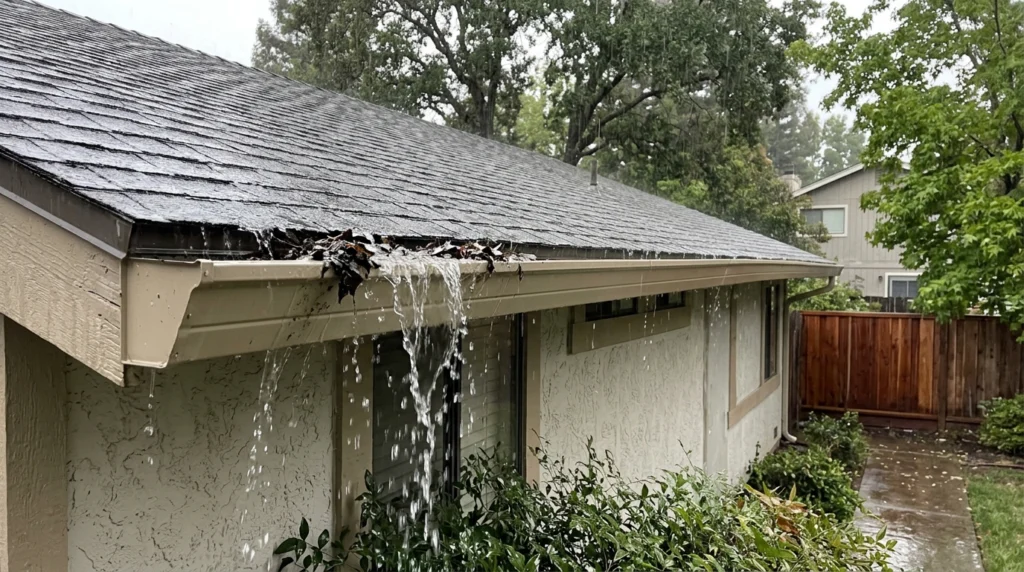
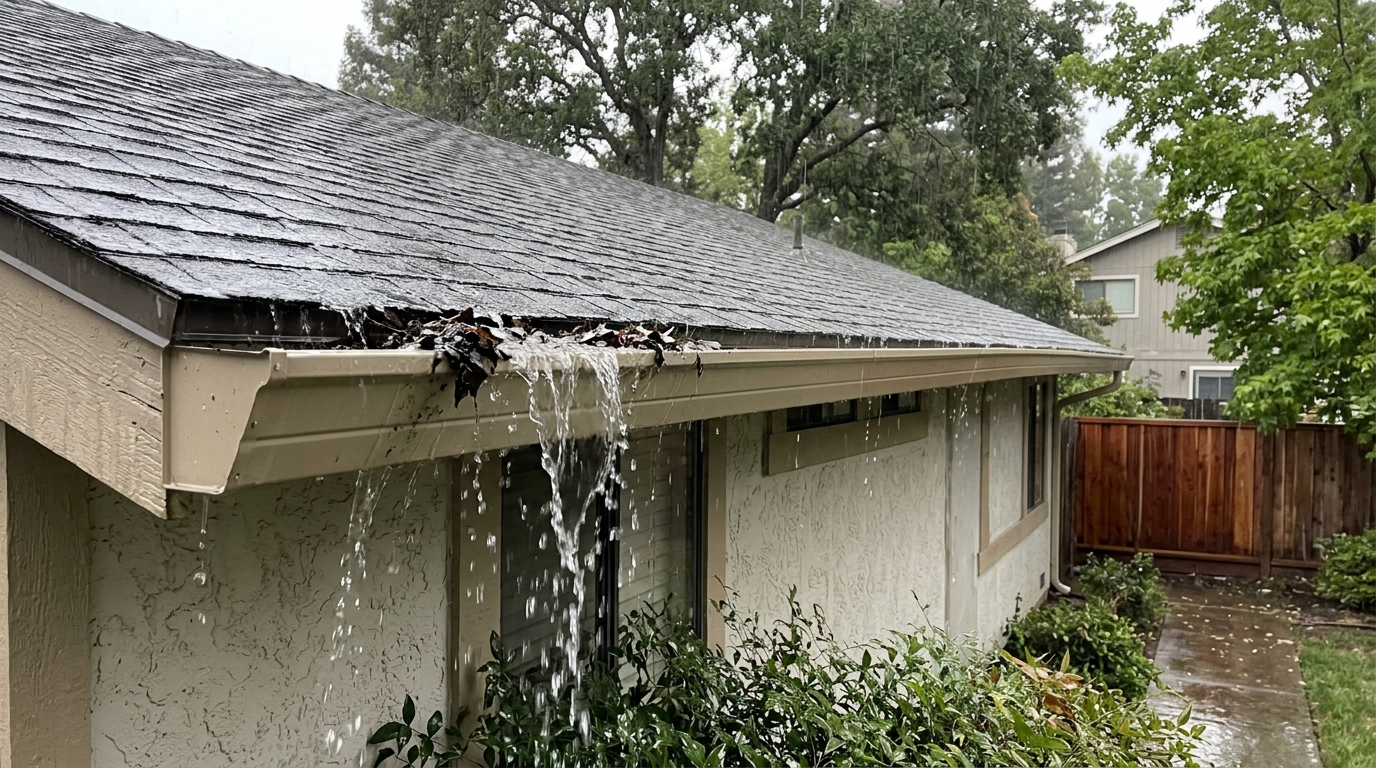
If your gutters are overflowing on one side, the cause is usually a localized blockage, improper slope, or drainage problem. A damaged gutter section or poorly positioned downspout can also affect water flow. Our Sacramento gutter cleaning and repair services help homeowners identify these issues and restore proper drainage.
When one side overflows while the rest appears to work normally, the problem often starts in a specific section. Water may collect near a corner, spill over beneath a roof valley, or back up around a blocked downspout. Finding the exact starting point helps determine whether cleaning, adjustment, or repair is needed.
This guide explains why gutters overflow on one side, how to recognize each issue, and what homeowners can do to improve drainage.
Why Are My Gutters Overflowing on One Side?
One-sided gutter overflow usually means water cannot move through a particular section efficiently. Debris, incorrect gutter pitch, sagging brackets, or concentrated roof runoff can interrupt the normal drainage route.
Here are seven common causes:
- Leaves and debris blocking one gutter section.
- A clogged or restricted downspout.
- Incorrect gutter slope or pitch.
- Sagging gutters or loose support brackets.
- Heavy water flow from a roof valley.
- Gutter guards restricting water entry.
- Poor gutter positioning or damaged sections.
The location of the overflow provides an important clue. For example, water spilling near a downspout may indicate a blockage. Overflow near a roof valley may point toward concentrated runoff or limited gutter capacity.
1. Leaves and Debris Are Blocking One Gutter Section
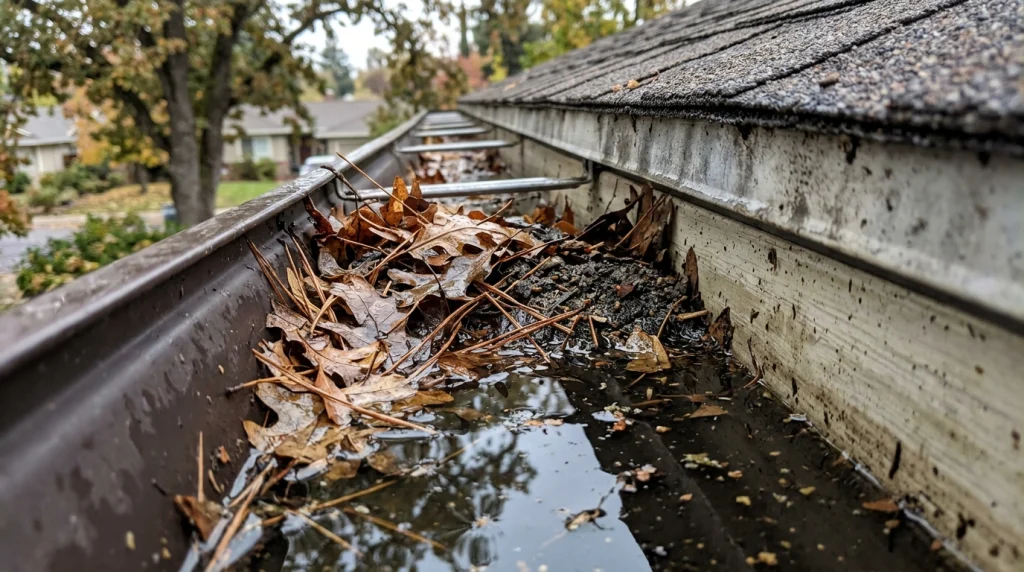
A partial blockage is one of the first things to investigate when gutters overflow in one area. Leaves, twigs, seed pods, pine needles, and roof sediment can collect inside the channel. This buildup slows water movement and creates a backup during rainfall.
The remaining gutter sections may continue draining normally. However, the obstructed area can fill quickly and send water over the front edge.
Common Signs of a Gutter Blockage
You may notice:
- Water spilling over one specific gutter section.
- Leaves or debris visible near the roof edge.
- Water collecting in one part of the gutter.
- Overflow starting during moderate rainfall.
- Nearby downspout flow appearing weaker than usual.
How Can You Fix It?
A professional gutter cleaning removes accumulated debris and checks the drainage route. Cleaning should cover the full gutter run, not only the visible overflow point.
Our residential gutter cleaning service in Sacramento includes debris removal and downspout flushing. You can also read our guide to clogged gutters in Sacramento for more information about common blockage signs.
2. A Clogged Downspout Is Restricting Water Flow
A downspout carries rainwater from the gutter toward the ground drainage area. When it becomes blocked, water cannot leave the gutter efficiently. The water level rises and may spill over near the downspout connection.
This issue can make one side of the home overflow while other sections appear clear. Sometimes, the blockage sits inside an elbow or lower section that is difficult to see from the ground.
Signs of a Blocked Downspout
Look for these visible clues:
- Water spilling near the downspout opening.
- Little or no water coming from the outlet during rainfall.
- Debris collected around the downspout entrance.
- Water remaining inside the connected gutter section.
- Overflow returning after the gutter surface looks clear.
What Should You Do?
The downspout needs a proper inspection and clearing. Removing leaves from the gutter alone may not restore drainage if the pipe remains restricted.
Our downspout cleaning service in Sacramento addresses blockages and checks water flow. For additional guidance, read our article about blocked downspouts.
3. Your Gutters Have the Wrong Slope or Pitch
Gutters need a slight slope toward their downspouts. This helps rainwater move through the channel and reach the correct drainage outlet.
When the pitch is incorrect, water may collect in a low section instead. During rainfall, that section fills faster and can overflow before water reaches the downspout.
A gutter may also develop an uneven slope after years of use. Small changes in brackets, roofline movement, or installation can affect water movement.
How Can You Recognize Incorrect Gutter Pitch?
Some common signs include:
- Water sitting in the gutter after rainfall.
- Overflow repeatedly occurring in the same location.
- A visible low point along a long gutter run.
- Water flowing toward the opposite end from the outlet.
- Debris collecting in one section more frequently.
How Is the Problem Fixed?
A professional can inspect the gutter alignment and check its slope. Depending on the condition, the solution may involve adjusting the hangers, repositioning the section, or correcting the installation.
Cleaning alone will not solve an incorrect pitch. The gutter needs proper adjustment so water can move toward its outlet.
For more information about gutter problems and their solutions, visit our Gutter Problems Guide for Sacramento homeowners.
4. Sagging Gutters or Loose Brackets Are Changing Water Flow
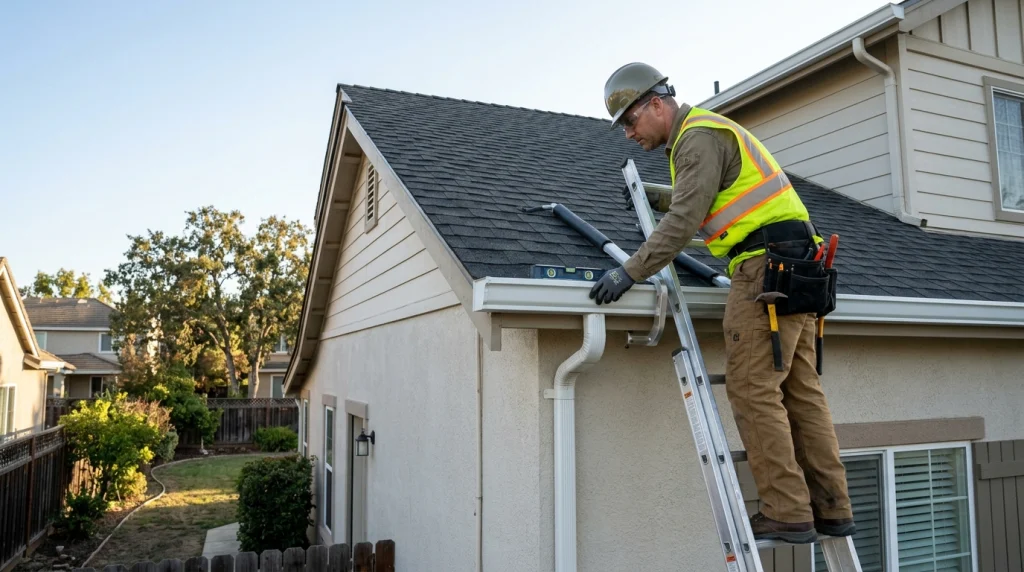
Gutters depend on secure hangers and brackets to maintain their position. Over time, fasteners can loosen, supports may deteriorate, and sections can begin to sag.
Even a slight change in alignment can create a low spot. Water collects there instead of moving toward the downspout. This can cause repeated overflow along one side of the property.
Heavy debris also adds weight to the gutter system. Wet leaves and compacted pine needles can place additional pressure on older supports.
Signs Your Gutters May Be Sagging
Watch for:
- A visible dip along the gutter line.
- Sections pulling away from the fascia board.
- Water collecting around loose brackets.
- Overflow appearing beneath a low section.
- Gutter joints separating or shifting.
What Is the Best Solution?
The repair depends on the gutter’s overall condition. A technician may need to tighten or replace hangers, realign the gutter, or repair a damaged section.
If the fascia board behind the gutter has deteriorated, it may also need attention before the gutter can be secured properly.
Our gutter repair service in Sacramento can help address loose, leaking, or sagging gutter sections.
5. A Roof Valley Is Sending Too Much Water Into One Area
A roof valley is where two roof slopes meet. During rainfall, water from both surfaces moves toward this point and travels down the roof.
When a valley directs a large amount of water into one short gutter section, that area may receive more runoff than the surrounding sections. This is particularly noticeable during heavy rainfall.
Roof valleys can also collect leaves, pine needles, and small branches. These materials may move into the gutter and restrict water flow near the same location.
What Should You Look For?
You may notice overflow directly beneath a roof valley. The problem may become more visible during heavy rainfall, even when the rest of the gutters remain clear.
Debris collecting below the valley can also indicate that the roof drainage route needs attention.
How Can This Problem Be Addressed?
The roof valley, gutter section, and downspout should be assessed together. Removing debris may improve flow, while persistent overflow may require a review of gutter capacity or drainage layout.
Our roof and gutter cleaning service in Sacramento helps address debris along roof edges and gutter systems.
6. Gutter Guards Are Restricting Water Entry
Gutter guards help reduce the amount of large debris entering a gutter system. However, they still need periodic inspection and maintenance.
Leaves, seed pods, roof grit, and fine debris can collect on top of the guards. This material may restrict water from entering the gutter properly.
Some sections can also collect more debris than others. This creates uneven drainage and may cause one side to overflow while the remaining system continues working.
Signs of a Gutter Guard Problem
Check for visible signs such as:
- Leaves sitting across the guard surface.
- Water running over the guard instead of entering.
- Debris collecting near corners and roof valleys.
- Overflow continuing after the gutters were cleaned.
- Different water flow between guarded sections.
What Should You Do?
The guards need inspection and suitable cleaning. Depending on their design, a professional may need to lift or remove sections to clear debris underneath.
You can learn more through our gutter guard cleaning service in Sacramento and our Sacramento gutter guard guide.
7. Your Gutters Are Poorly Positioned or Have Damaged Sections
Sometimes, the issue comes from the original gutter installation. A gutter may sit too far below the roof edge, have an unsuitable position, or fail to capture water from a particular roof section.
Water can then pass behind the gutter or spill over the front edge. Damage to gutter joints and sections may also affect how water travels through the system.
This problem can be more noticeable around roof corners, extensions, and areas where different roof slopes meet.
Signs of an Installation or Positioning Problem
Look for these patterns:
- Rainwater running behind the gutter.
- Water missing the gutter during rainfall.
- Overflow happening at the same roof corner.
- Gaps between connected gutter sections.
- Water spilling over even when the gutter is clear.
How Can You Correct It?
A professional inspection can determine whether the gutter needs repositioning, joint repair, or replacement. The roof edge and drip edge should also be checked where water appears behind the gutter.
If the system has an ongoing design or capacity issue, a repair or installation adjustment may provide a more suitable long term solution.
Our gutter installation service in Sacramento can help homeowners review their gutter system and available options.
How to Find Out Why One Side of Your Gutters Is Overflowing
You can gather useful information by observing the gutter system from the ground during rainfall. You do not need to climb onto the roof to identify visible overflow patterns.
Follow these simple steps:
1. Identify the Exact Overflow Location
Notice whether water spills near a corner, directly below a roof valley, or close to a downspout. The starting point can help narrow down the cause.
2. Observe the Downspout Outlet
From a safe position, check whether water comes out of the downspout during rainfall. Weak or missing discharge may indicate a restriction.
3. Look for Visible Gutter Changes
From ground level, check for sagging sections, loose-looking brackets, or visible separation. These signs can indicate an alignment or support issue.
4. Notice When the Overflow Happens
Does the overflow begin during light rain or only during heavy storms? Water spilling during moderate rainfall may suggest a blockage or pitch problem. Overflow during intense rainfall may also involve roof runoff volume or gutter capacity.
5. Record the Affected Area
Take a photograph from a safe location and note where the water appears. This information can help a gutter professional inspect the correct section.
Avoid climbing a wet ladder or walking on the roof to investigate. For general ladder safety information, visit the American Ladder Institute.
Is One-Sided Gutter Overflow a Sign That You Need Gutter Repair?
Not always. Sometimes, a thorough cleaning and downspout flushing can restore proper water movement. However, repeated overflow after cleaning may indicate an alignment, support, or installation issue.
The right solution depends on what is causing the water to spill.
| What you notice | Possible cause | Suitable next step |
|---|---|---|
| Overflow near one corner | Local debris blockage | Inspect and clean the gutter section |
| Water spilling near a downspout | Restricted downspout | Clear and test the downspout |
| Water sitting in one section | Incorrect pitch | Check gutter alignment |
| Visible dip in the gutter | Loose or damaged hangers | Inspect and repair supports |
| Overflow below a roof valley | Concentrated roof runoff | Inspect valley and gutter capacity |
| Water running over gutter guards | Guard surface blockage | Clean and inspect the guards |
| Water running behind the gutter | Positioning or drip edge issue | Inspect installation and roof edge |
Cleaning and repair address different issues. A professional inspection can help determine whether the system needs one service or a combination.
Why Sacramento Homeowners Should Pay Attention to One-Sided Overflow
Sacramento homes experience seasonal debris buildup from mature trees, roof edges, and changing weather conditions. Oak leaves, sycamore debris, pine needles, and small branches can collect in different parts of a gutter system.
During the dry season, debris can build up before the arrival of seasonal rainfall. Once rain begins, a partially restricted gutter may struggle to move water toward the downspout.
Local property conditions also vary across the region. For example, mature oak and sycamore trees around Carmichael can contribute to seasonal debris. Properties in Auburn may deal with compacted pine needle buildup.
Homeowners in Fair Oaks and Orangevale should also consider nearby tree coverage when planning maintenance.
A regular cleaning schedule helps reduce debris accumulation and gives homeowners an opportunity to identify early signs of gutter damage.
How Often Should You Clean Gutters to Prevent Overflow?
Most Sacramento homes benefit from at least two gutter cleaning visits each year. Properties with heavy tree coverage or recurring blockages may need additional visits.
A practical schedule includes:
- Fall: Remove leaves and debris before the main rainy season.
- Spring: Clear material that collected during winter.
- Additional visits: Consider them for homes with heavy oak or pine coverage.
The right schedule depends on your roof design, surrounding trees, and previous gutter condition. A property with several roof valleys may need more attention than a home with a simple roofline.
Read our seasonal gutter maintenance guide for Sacramento for more advice. You can also explore our article on how often gutters should be cleaned.
Gutter Cleaning Services Across Sacramento and Nearby Cities
One-sided gutter overflow can affect homes throughout the Sacramento region. Local tree coverage, roof design, and property conditions influence how often gutters need attention.
Our service area includes Sacramento and nearby communities. Explore the relevant city pages for local gutter cleaning information:
- Gutter Cleaning in Roseville
- Gutter Cleaning in Folsom
- Gutter Cleaning in El Dorado Hills
- Gutter Cleaning in Auburn
- Gutter Cleaning in Lincoln
- Gutter Cleaning in Carmichael
- Gutter Cleaning in Davis
- Gutter Cleaning in Elk Grove
- Gutter Cleaning in Fair Oaks
- Gutter Cleaning in Citrus Heights
- Gutter Cleaning in Orangevale
- Gutter Cleaning in Rancho Cordova
- Gutter Cleaning in Rocklin
- Gutter Cleaning in West Sacramento
Each property has different drainage needs. A local assessment helps identify the right cleaning schedule and any repair requirements.
Frequently Asked Questions About Gutters Overflowing on One Side
Why do my gutters overflow on one side but not the other?
One-sided overflow often happens because of a partial blockage, incorrect gutter slope, sagging support, or restricted downspout. A roof valley can also direct more water into one section. Identifying where the overflow starts helps determine the best solution.
Can dirty gutters cause overflow on only one side?
Yes. Leaves, pine needles, and roof debris can collect in one section and slow water movement. The remaining gutter sections may continue draining normally while the blocked area overflows.
Why does my gutter overflow near the downspout?
A blockage inside the downspout can prevent water from leaving the gutter. Debris may collect near the opening or become lodged inside an elbow. Cleaning and flow testing can help restore proper drainage.
Can incorrect gutter pitch cause one-sided overflow?
Yes. Gutters need a suitable slope toward their downspouts. Incorrect pitch can create low spots where water collects and eventually spills over the edge.
Why do my gutters overflow during heavy rain but work normally in light rain?
Heavy rainfall sends more water through the gutter system in a shorter period. A narrow outlet, partial blockage, concentrated roof runoff, or limited gutter capacity may become more noticeable during stronger rainfall.
Should I replace my gutters if one side keeps overflowing?
Not necessarily. Cleaning, adjusting the pitch, securing loose hangers, or clearing a downspout may solve the issue. Replacement is worth considering when sections are extensively damaged or the system cannot manage the property’s drainage requirements.
Can gutter guards prevent one-sided overflow?
Gutter guards reduce some debris entering the system, but they do not remove the need for inspection. Material can collect on top of guards or underneath certain designs and restrict water entry.
How much does it cost to fix an overflowing gutter?
The cost depends on the actual cause. Cleaning and downspout clearing generally require a different scope from bracket replacement, gutter realignment, or full section replacement. A property inspection helps establish an accurate estimate.
Get Professional Help for Overflowing Gutters in Sacramento
When gutters overflow on one side, the problem usually has a specific cause. A blocked section may need cleaning, while poor alignment or damaged supports may require repair. Finding the source helps homeowners choose the right service for their property.
Our team provides professional gutter cleaning, downspout clearing, and gutter repair in Sacramento. We inspect the gutter system, remove accumulated debris, check visible components, and help identify areas that need further attention.
Explore our gutter cleaning and repair services in Sacramento or request a free gutter estimate. A well maintained gutter system helps direct rainwater away from your roofline and foundation.