
Buyer's Guide

Gutter Guard Guide

Which Type Actually Works in Sacramento

Sacramento drops broad oak leaves and fine pine needles on the same roofline, and a guard built for one lets the other straight through. Here is how the five guard types actually compare, what they cost installed, and when they are genuinely worth it.

Get a Guard Recommendation

Matched to your trees, your roofline, and your existing gutter condition.

Do Gutter Guards Work in Sacramento?

Gutter guards reduce how often you need to clean your gutters, typically by 70 to 90 percent, but they do not eliminate cleaning entirely.

Micro-mesh guards generally perform best in Sacramento because the region’s debris mix includes both broad valley oak leaves and fine Ponderosa pine needles, and a guard built only to handle leaves lets needles pass straight through. Installed pricing runs roughly $8 to $35 per linear foot depending on guard type and material, with aluminum frames holding up best against Sacramento’s extreme summer heat and UV exposure.

What Gutter Guards Actually Do

A gutter guard is a cover or screen installed over an existing gutter system to block debris while still letting water flow through into the trough below.

The goal is fewer cleanings, not zero cleanings, since even the best guard systems still need periodic attention. See our gutter guard cleaning guide for what maintenance on an existing guard system actually involves.
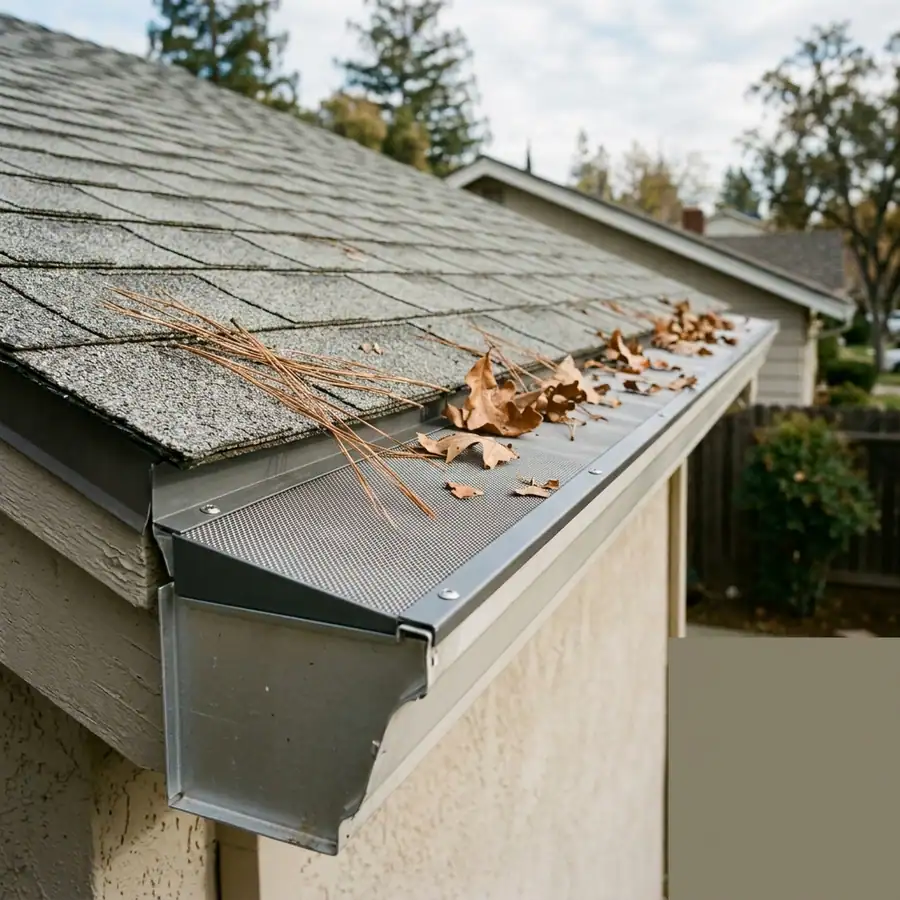
Micro-mesh gutter guard installed over an aluminium gutter on a Sacramento home

Fewer Cleanings, Not Zero

Guards cut cleaning frequency 70 to 90 percent — they do not remove the need entirely.

Gutter Guard Types Compared

Not all guards work the same way, and the differences matter more in Sacramento than in climates with lighter, more uniform debris.

Five guard types, how each filters debris, and where each fits best

Guard Type

How It Works

Best For

Micro-mesh

Fine mesh screen blocks small debris while allowing water through

Mixed oak and pine debris, Sacramento’s most common combination

Reverse curve (solid top)

Solid curved cover uses water adhesion to pull water in while debris slides off the front edge

Broad leaf debris, less effective against fine needles and small seeds

Screen guards

Simple perforated screen sits over the gutter opening

Lighter debris loads, lower upfront cost

Brush-style

Bristled insert fills the gutter channel, trapping larger debris on top

Smaller jobs or DIY-friendly installation

Foam guards

Porous foam insert fills the gutter opening

Budget installations, though foam tends to degrade faster in extreme heat

Material Comparison

The guard type determines how it filters debris. The frame material determines how long it survives Sacramento’s climate.

Aluminum

The strongest overall choice for Sacramento homes. Resists rust through wet winters, will not warp under summer heat well past 100 degrees, and holds its shape under ladder pressure during cleaning or inspection.

Steel

Strong durability but at a higher cost than aluminum, generally reserved for homes wanting maximum long-term strength.

Plastic / uPVC

Not well suited to Sacramento's climate. Intense summer heat and UV exposure cause these materials to degrade and warp faster than metal alternatives, often requiring replacement sooner than the upfront savings justify.

Copper

A premium option, typically chosen for its appearance and longevity on higher-end homes, at a significantly higher price point than aluminum or steel.

Do Gutter Guards Eliminate Cleaning Entirely?

No — and any pitch claiming otherwise oversells what a guard system does.

Material still collects on top of screens and mesh, even when nothing reaches the trough.

Fine debris like pine needles, roof grit, and pollen can still work through smaller gaps over time.

Guarded systems typically need cleaning once a year, versus twice a year or more without guards.

Homes under heavy oak and pine canopy may still need attention more than once annually — just significantly less than an open gutter system would require.

Gutter Guard Cost in Sacramento

Installed pricing varies by guard type and material, generally running $8 to $35 per linear foot.

Installed gutter guard cost per linear foot

Guard Category

Typical Installed Cost Per Linear Foot

Basic screen guards

$8 – $14

Standard aluminum micro-mesh

$14 – $22

Premium stainless micro-mesh or reverse curve systems

$17 – $35

For a typical 150 linear foot home

Adding guards at the same time as a new gutter installation typically saves 15 to 20 percent compared to installing them as a separate project later.

Are Gutter Guards Worth It?

For most Sacramento homes with real tree cover, yes — though the payback period depends on how much you currently spend on cleaning.

The Case For Guards

If your property needs cleaning two or more times a year due to heavy oak or pine debris, guards typically pay for themselves within five to seven years through reduced cleaning costs alone.

Payback is faster on multi-story homes, where cleaning costs run higher due to ladder work.

The Case Against Rushing In

If your property has minimal tree cover and already only needs annual cleaning, the upfront cost of guards may take considerably longer to pay back.

A basic annual cleaning plan might be the more cost-effective choice for now.

A Note on Installation Quality

A poorly installed guard, particularly one attached incorrectly to the fascia or tucked improperly under the roof’s drip edge, can create more problems than it solves — including trapped moisture or even compromised roof warranty coverage.

Any reputable installer should clean and inspect your existing gutters before installing guards, not install over debris that is already there.

How to Choose the Right Guard for Your Property

1

Identify Your Debris Type

Heavy oak canopy alone can often work well with a reverse curve system. Mixed oak and pine, the more common Sacramento scenario, generally performs better with micro-mesh.

2

Check the Frame Material

Aluminum is the safest default for Sacramento’s heat and UV exposure. Avoid plastic or uPVC frames for anything beyond a short-term budget fix.

3

Confirm Installation Method

The guard should tuck under the drip edge without lifting shingles or requiring roof modification. If an installer proposes attaching directly through roofing material, get a second opinion.

4

Ask About Warranty Terms

Longer warranties with clear, transferable coverage are generally a better sign of product confidence than a short-term guarantee.

5

Clean Existing Gutters First

Installing guards over an already clogged or damaged system locks in the existing problem rather than solving it.

Gutter Guard FAQs

Yes, when matched correctly to your property’s debris type. Micro-mesh systems generally perform best given Sacramento’s mixed oak and pine tree cover, since they catch both broad leaves and fine needles.

No. Guards reduce cleaning frequency significantly, often by 70 to 90 percent, but debris still collects on top of guards and fine material can still work through over time.

Micro-mesh uses a fine screen to physically block debris while letting water pass through. Reverse curve guards use a solid curved surface and water adhesion to pull water in while debris slides off the front, which works well for broad leaves but less well for fine needles and small seeds.

Sacramento’s intense summer heat, regularly exceeding 100 degrees, along with strong UV exposure causes plastic and uPVC frames to degrade and warp faster than aluminum or steel alternatives.

Installed pricing typically runs $8 to $35 per linear foot depending on guard type and material, or roughly $1,200 to $5,250 for a typical 150 linear foot home.

Installing guards at the same time as a new gutter installation typically saves 15 to 20 percent compared to adding them to an existing system later.

Yes. Any reputable installer should clean and inspect your existing gutter system before installing guards, since installing over existing debris or damage locks in the problem.

Get a Guard Recommendation Built for Your Property

The right guard depends on your trees, your roofline, and your existing gutter condition, not a generic one-size answer. Call now for a free consultation, and we will recommend what actually fits your home.