
Maintenance Calendar

Seasonal Gutter Maintenance Guide

A Month by Month Calendar for Sacramento Homes

Two cleanings a year work — but only if they land in the right weeks. Here is the calendar built around Sacramento’s oak drop, acorn season, and the handful of atmospheric river storms that deliver almost all of the region’s rain.

Get a Custom Maintenance Plan

A calendar timed around your property, not a generic citywide guess.

How Often Should Sacramento Gutters Be Cleaned?

Sacramento homes generally need two gutter cleanings a year, one in late October before the first winter storms and one in early spring after the rainy season passes. Properties with three or more mature oak trees directly over the roof often need quarterly service instead, since Sacramento’s oaks shed year round in different forms — leaves in fall, acorns in late summer, pollen in spring, and twigs during storms.

Timing matters as much as frequency. A late October cleaning done before consistent rain arrives prevents most of the overflow damage that shows up each winter.

Why Sacramento Needs a Seasonal Schedule, Not a Once a Year Visit

Sacramento’s Mediterranean climate creates a specific rhythm most homeowners do not fully account for. Hot, dry summers give way to concentrated winter rainfall, often arriving in intense atmospheric river storms rather than steady rain spread across the year.

A single annual cleaning, timed wrong, leaves gutters vulnerable during exactly the weeks they need to work hardest.

Sacramento’s reputation as the City of Trees is real in every gutter across the region. Valley oaks, sycamores, and pines each shed on their own schedule, which means the right maintenance calendar depends as much on what is growing over your roof as it does on the season itself.
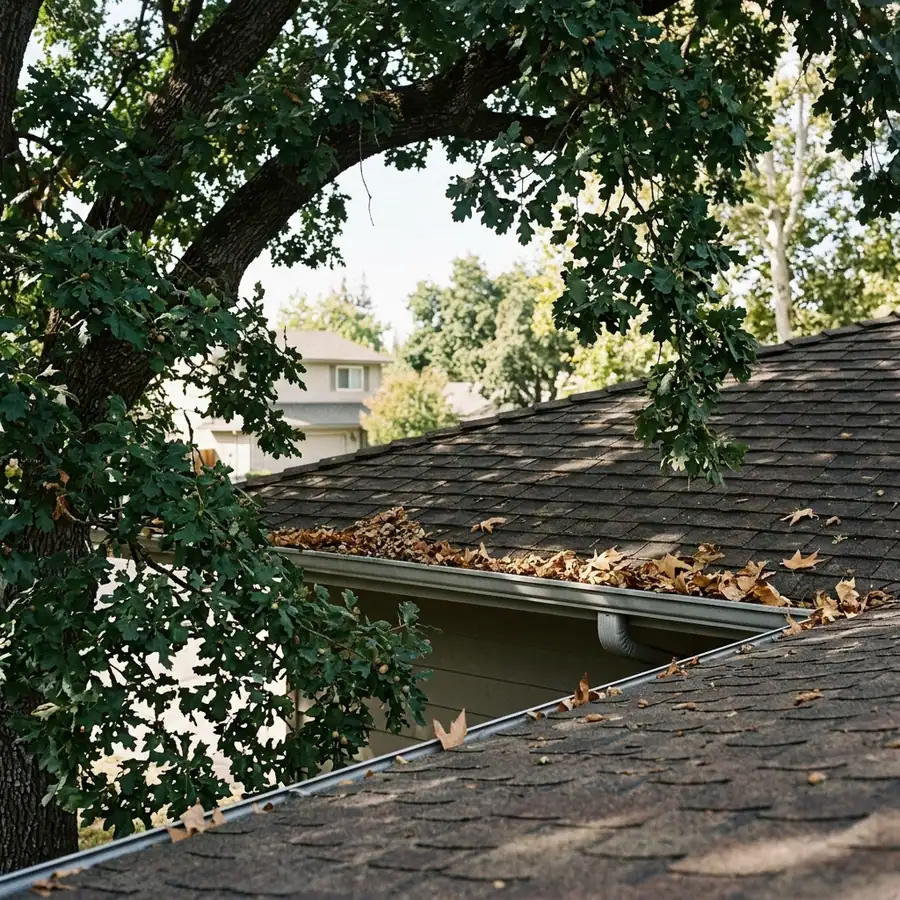
Mature valley oak canopy overhanging a Sacramento rooftop and gutter line — seasonal gutter maintenance guide Sacramento

City of Trees

Oaks, sycamores and pines each shed on their own schedule — your calendar follows the canopy.

What Each Season Actually Requires

Fall

The most important cleaning of the year. Late October is the priority window for most Sacramento homes. This clears early leaf fall and summer buildup before consistent winter rain arrives, and booking before late October avoids the seasonal rush that pushes pricing 20 to 30 percent higher through November.

The follow-up pass

Late November into December is necessary for homes under heavy oak, sycamore, or pine canopy. This second pass catches late leaf drop and seed pods that fall after the first cleaning, particularly in neighborhoods like East Sacramento and Land Park where mature trees often shed in waves rather than all at once.

Why it matters: Missing the fall cleaning entirely is the single most common cause of winter overflow damage. A gutter packed with a full season of dry summer debris has nowhere to send sudden, heavy rainfall the moment the first real storm hits.

Winter

Monitoring, not necessarily cleaning. Winter is less about scheduled cleaning and more about watching for problems during active storms.

What to watch for

Same-day situations: An emergency overflow, active water intrusion, or a detached section during a storm is not something to note for the next scheduled visit. See our emergency gutter cleaning service for immediate response service.

Early Spring

The post-storm check. March through April is the recommended window for a post-storm inspection and cleaning. This removes debris accumulated during the rainy season and prepares the system for any late spring showers, while also catching the pollen buildup that Sacramento’s oaks produce heavily in spring.

Especially valuable for

Homes near creeks, greenbelts, or large shade trees — common across Midtown, Tahoe Park, and Pocket-Greenhaven — where moisture tends to linger longer after storms than it does on more open lots.

The goal: Clear storm season buildup before it lingers into summer and hardens in place.

Summer

Inspection and preparation, not peak cleaning. Summer rarely requires a full cleaning for most homes, but it is a useful window for a quick inspection, particularly for properties with heavy tree coverage or in high wind areas.

What to check

Worth knowing: This is also when oak acorns begin dropping on many Sacramento properties, adding a debris type distinct from the leaf drop that dominates fall. Catching a small problem now beats fall’s higher demand and pricing.

How Often, by Property Type

Recommended gutter maintenance schedule by property type

Property Type

Recommended Schedule

Minimal tree cover

Once a year, late October

Standard tree cover (1 to 2 mature trees)

Twice a year, late October and early spring

Heavy tree cover (3+ mature oaks over the roof)

Quarterly, adjusted seasonally

Near creeks, greenbelts, or dense shade

Twice a year plus a summer inspection

Commercial or multi-building properties

Recurring contract, typically twice a year minimum

A Note on Ash and Fire Season Debris

Ash from regional wildfire smoke is one of the harder debris types to clear once it settles into a gutter, since it bonds to leaf debris when damp and hardens into a compacted layer.

It Bonds, Not Piles

Ash binds to damp leaf debris and sets into a compacted layer rather than sitting loose on top.

Rinse, Don't Scoop

Rinsing and flushing rather than simply scooping is important when ash is part of the load, otherwise residue sets up in the downspout the first time it rains.

Check in Late Summer

Before fall cleaning begins is a reasonable time to check for this if your area saw heavy smoke conditions that season.

Why Timing Beats Frequency

Two cleanings done at the wrong time are less effective than two cleanings done at the right time.

Too early. A cleaning in September, before oak leaf drop has really started, leaves gutters exposed through the heaviest debris weeks of fall.

Too late. A cleaning delayed into January, after storms have already arrived, means damage may already be underway before the visit even happens.

The late October and early spring windows are recommended specifically because they bracket Sacramento’s concentrated rain season on both sides — catching debris before it matters, and clearing storm season buildup before it lingers into summer.

Setting Up a Recurring Schedule

Rather than tracking these windows manually each year, a maintenance plan schedules visits automatically based on your property’s specific tree cover and history.

This is particularly useful for property managers and HOA boards handling multiple buildings, who typically book recurring twice a year service — once before fall rains and once in late spring — with a reminder ahead of each visit.

Plans can be set to monthly, quarterly, biannual, or annual visits based on what your property actually needs.

Technician on a scheduled recurring gutter maintenance visit at a Sacramento home — seasonal gutter maintenance guide Sacramento

Monthly to Annual

Visits scheduled automatically around your canopy, with a reminder before each one.

Seasonal Gutter Maintenance FAQs

Most homes need twice a year, once in late October before storms and once in early spring after the rainy season. Homes with three or more mature oaks over the roof often need quarterly service instead.

The late October cleaning, done before consistent winter rain arrives, prevents the majority of overflow damage that shows up each winter season.

If your home sits under heavy oak, sycamore, or pine canopy, a follow-up cleaning in late November or December catches late leaf drop and seed pods the first visit missed.

Summer is better suited to a quick inspection than a full cleaning for most homes, though properties with heavy tree cover benefit from checking hangers and guards before fall demand increases.

Cleaning too early misses the heaviest debris weeks of fall, and cleaning too late means storm damage may already be underway. The late October and early spring windows are timed specifically around Sacramento’s rain season.

Yes. Ash bonds to leaf debris when damp and hardens into a compacted layer that is harder to clear than typical debris, often requiring rinsing and flushing rather than simple scooping.

Three or more mature oak trees directly over or near your roof is a general threshold where quarterly maintenance becomes more cost effective than dealing with heavier buildup twice a year.

Get a Maintenance Schedule Built for Your Property

Every property’s tree cover and location changes the right schedule. Call now for a free assessment, and we will build a maintenance calendar timed around your home, not a generic citywide guess.